


MDJLABS / SCIENTIFIC PROOF
What the
science says
SOURCED FACTSNOT MARKETING
FIG. 04 — FORGETTING CURVE · RETENTION (%) / TIME
1885FOUNDING ACT · MEASURED BY HAND
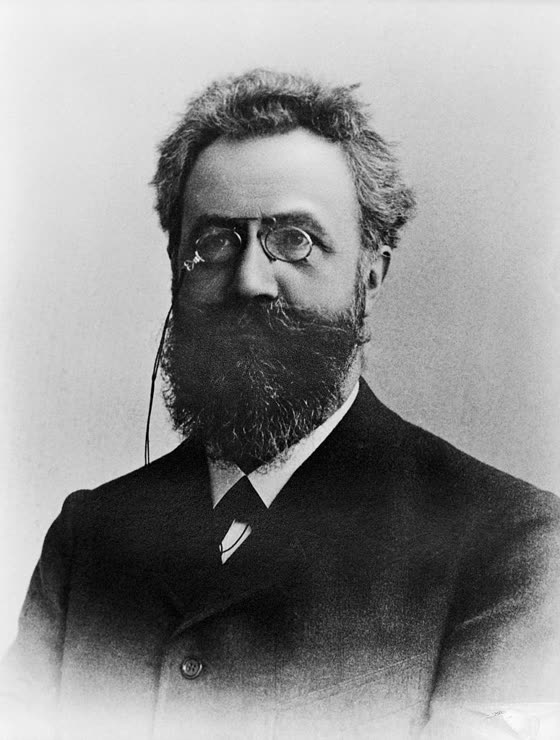
WITH SPACED REPETITIONWITHOUT RECALL — EBBINGHAUSHERMANN EBBINGHAUSHe measured forgetting first — on himself. The curve takes shape before him.
Ebbinghaus, 1885 — model replicated by Murre & Dros, PLOS ONE, 2015. Spaced repetition brings each notion back just before it fades.
CH. 02 · THE NUMBERS4 BEATS · THE LOSS, THEN THE REBOUND
is lost within the hour that follows a training session, if it isn’t recalled.
Ebbinghaus · replication Murre & Dros, 2015 · 1 HRattrition of unpracticed knowledge after 2 years.
Studies on professional knowledge retention · 2 YRSof theoretical training is actually applied in the field.
Research on training transfer (Saks et al.) · IN THE FIELDretention when learning is coupled with immediate execution.
Cognitive psychology of active learning · RECOVERYCH. 03 · THE TRAPPROOF 01 / 03 · 4 BEATS
The illusion
of competence
2005WHAT WE THINK WE KNOW VS WHAT WE KNOW
Journal of Experimental Psychology: LMC, 31(2), 187–194
We mistake recognizing
for being able to recall.
Re-reading feels like learning without producing learning. The reader mistakes familiarity for mastery — and the decision-maker reading this page is no exception.
CH. 04 · THE MECHANISMPROOF 02 / 03 · 4 BEATS
The testing effect
2006RETENTION MEASURED AT ONE WEEK
The Power of Testing Memory — Perspectives on Psychological Science, 1(3), 181–210
Testing beats re-reading. This is ProLearn’s exact mechanism — demonstrated, not asserted.
CH. 03 · REINFORCED PROOF
2024ACADEMIC MEDICINE · REAL COHORT
26 258practicing physicians
Randomized study — spaced repetition vs no recall, measured on real practitioners. The largest cohort, the strongest result.
“Effect of Spaced Repetition on Learning and Knowledge Transfer in a Large Cohort of Practicing Physicians,” Academic Medicine, 2024.
SCIENCE BECOMES PRODUCT
ProLearn plants its scheduled recalls into the curve — each recall at the optimal moment lifts retention back above the mastery threshold.
The principle demonstrated above, executed: knowledge atoms, spaced recalls, execution in the field. The real product, not a diagram.
And cognitive load? Reducing friction — field-first ergonomics, logistics stress removed — frees mental bandwidth. In industrial settings, that bandwidth is safety.


DEMONSTRATED — NOT ASSERTED